Tag: Affordable Web Design

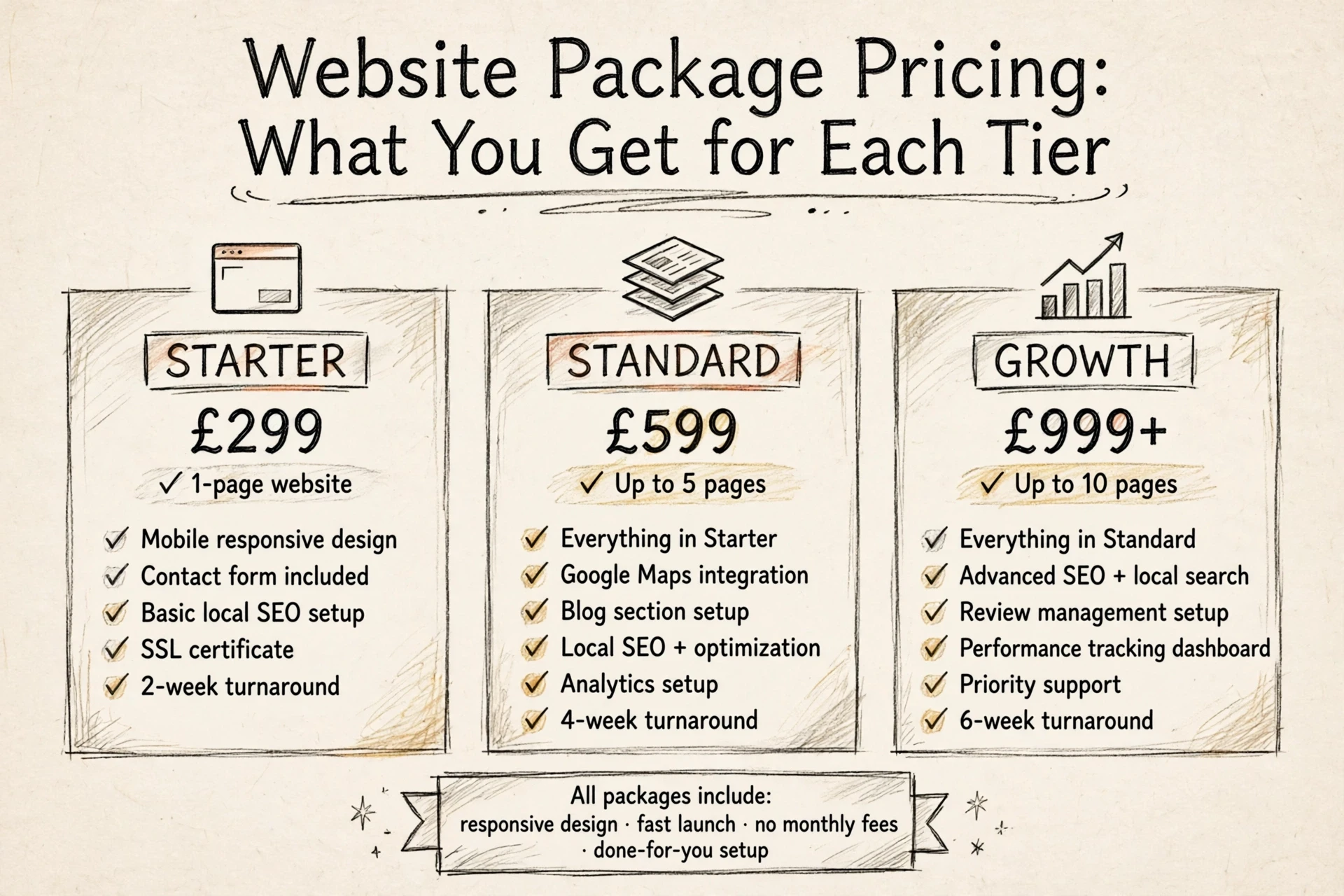
  • Website Package Pricing: What You Get for Each Tier

    Website Package Pricing: What You Get for Each Tier

    Quick Summary: Website package pricing only makes sense when you compare what each tier actually includes, not just the headline fee. The guide breaks down typical tiers – Starter for basic presence, Business for growing enquiries, and Specialist for selling or booking – and stresses checking scope, ownership, and support before committing. It advises matching the tier to your business goal, not your budget, and always asking for the total first-year cost including hosting and domain. Fixed-price providers like WebDon build done-for-you sites for local customers, so you know the full cost upfront and can upgrade later.

    A Dorset electrician gets two quotes, both called a small-business package. One buys a simple five-page site. The other adds booking tools and monthly edits. Website package pricing only makes sense once you know what each tier includes. This guide breaks down typical tiers, so website package pricing becomes a fair comparison instead of a guessing game. As a Dorset web design team offering fixed-price packages, we’ll show you exactly what to check before you commit.

    What Website Package Pricing Usually Covers

    Separate the Build from the Running Costs

    A website package price usually covers the build itself: design, page setup, mobile-friendly layout, basic SEO, and content placement. What it often leaves out is the running cost. Most sites need hosting, a domain name, an SSL certificate, and sometimes email. Some builders bundle these in; others bill them yearly on top.

    Ask for a two-line breakdown: one-off build fee, then monthly or annual running costs. This matters for fixed-price packages like ours at WebDon – knowing the full first-year total stops surprises and makes quotes easier to compare fairly.

    Also Read: About WebDon · Dorset Web Design from a Print Studio

    How Starter, Business, and Specialist Tiers Differ

    Each tier matches a different stage of business. Starter gets you online, Business helps you grow enquiries, and Specialist handles selling, booking, or bespoke features.

    Get the Essentials Online

    Starter packages suit new or small businesses that need a clean, credible presence quickly. Expect a handful of pages: home, services, about, and contact, plus your Google Business Profile set up properly. A Dorset builder or market stall holder doesn’t need months of work to get a simple, professional site live.

    Support More Services and Enquiries

    Business packages fit growing firms with more to say. You get extra pages for each service or location, stronger local SEO so nearby customers find you, enquiry forms, and copywriting help. Firms offering several trades under one roof, or shops with seasonal offers, get the room they need.

    Add Selling, Booking, or Custom Functions

    Specialist packages handle websites that must do things. That means online shops, appointment booking, membership areas, or custom tools built around your workflow. A hairdresser taking bookings, or a vendor selling at events, gets a site that works hard behind the scenes.

    A tradesperson and web designer compare website tiers on a tablet in a workshop
    A tradesperson and web designer compare website tiers on a tablet in a workshop

    Also Read: Dorset Web Design vs DIY Builders: Which Suits Startups?

    Compare Fixed-Price Offers on More Than the Headline Fee

    Two quotes can differ by hundreds of pounds and still be almost identical. Look past the price and compare what each offer actually includes.

    Check Scope, Ownership, and Support

    Ask every provider the same three questions. First, scope: how many pages, and who writes the text and supplies photos? Second, ownership: the site, domain, and content should belong to you, not the designer. Third, support: what happens after launch, and what do updates cost? A cheaper quote that answers all three well often beats a pricier one that doesn’t.

    Small business owner comparing website quotes at table
    Small business owner comparing website quotes at table

    Choose for the Business Job, Not the Biggest Tier

    Buy the package that fits the job your website must do. A plumber needs a clear service list, prices, and a phone number that stands out. A market stall selling online needs a shop instead of extra pages. Fixed-price providers like WebDon build for exactly this: a done-for-you site aimed at attracting local customers. Paying for a bigger tier you won’t use just slows the launch down.

    Also Read: New Google Business Trends for 2026: What Matters Now

    Choose the Right Tier and Plan Your Next Step

    Match the tier to your goal, not your budget. A tradesperson needing calls can start small. A shop selling online needs the mid or top package.

    Before you commit, check each package for:

    • Total first-year cost, not just the build price
    • Who owns the site and its content
    • Update costs after launch
    • Local SEO included or extra

    WebDon offers fixed-price packages for Dorset businesses, so you know the full cost upfront.

    Pick the tier that solves today’s problem. You can always upgrade later.

    Ready to compare? List your must-haves, then ask two or three providers for written quotes.
    Homepage
    Homepage

    Ready to pick a package? WebDon offers fixed-price website packages with the full cost agreed upfront. See what each includes at WebDon.

    Frequently Asked Questions

    Q1: Who offers the best fixed-price website package?

    Look for clear pricing, local SEO included, and a realistic launch plan. WebDon offers fixed-price packages built for Dorset small businesses, so you know the full cost before you start.

    Q2: What should a basic website package include?

    At minimum: a mobile-friendly design, contact page, Google Business setup, and basic local SEO. If a cheap package skips these, it won’t bring you customers.

    Q3: How much should a small business website cost in the UK?

    It depends on scope: a simple brochure site costs far less than one with booking or shop features. Always compare what’s included, not just the headline price.

    Q4: Can I upgrade my package later?

    Most providers allow this. Ask upfront whether extra pages, online booking, or an online shop can be added later without rebuilding the site from scratch.

    Conclusion

    The right package matches your actual needs, not the biggest page count. Compare what each tier includes, check the total cost, and pick the fixed-price option that gets your business online without fuss.
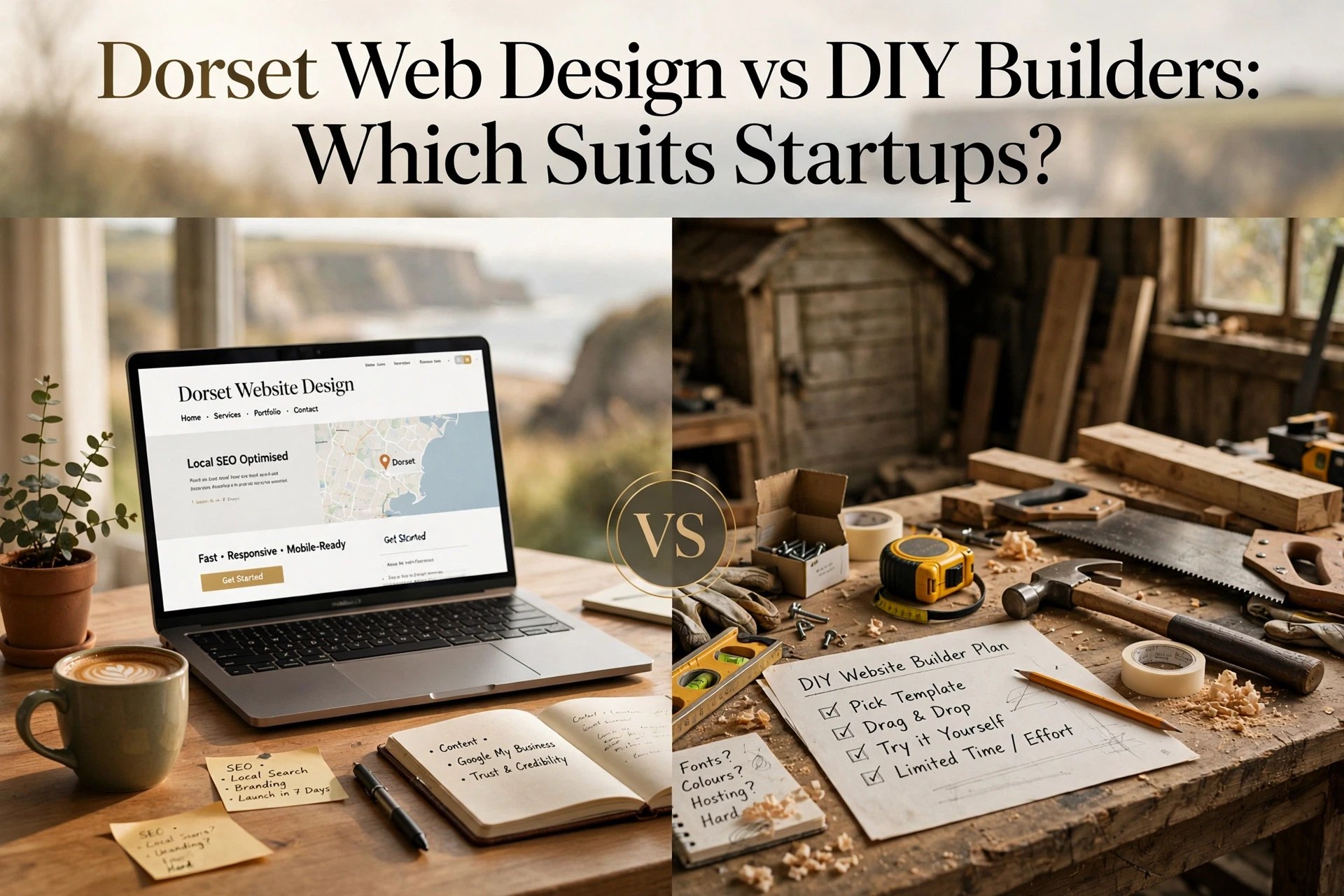
  • Dorset Web Design vs DIY Builders: Which Suits Startups?

    Dorset Web Design vs DIY Builders: Which Suits Startups?

    Quick Summary: For startups, DIY builders like Wix work only for testing ideas on a sub-£500 budget, but a professional Dorset designer wins when the site must bring in customers. DIY hides real costs in 20-60 hours of your time and locked SEO settings, while fixed-price services like WebDon (£350-£1,200) include local SEO and ownership. The honest test: if one lost customer per month costs more than a professional site, DIY is the expensive option.

    Testing a first offer? A DIY builder gets you online fast. Want a distinctive, locally found site without losing evenings? Hire a designer. This guide compares website design routes by cost, effort and visibility, covers Dorset web design pricing and web designer costs, and gives you a simple decision rule.

    Dorset Web Design vs DIY Builders: At a Glance

    Professional Dorset web designer DIY website builder
    Upfront cost WebDon lists £350 for one page, £700 for up to five pages, and larger projects from £1,200. Can start free; paid features require a plan.
    Ongoing costs An outright-build option has no monthly WebDon fee; hosted care is optional. Plan renewals and any selected domain, app, email, or transaction costs.
    Time and effort Designer handles the build; the business supplies core information and materials. Owner builds, writes, checks, and maintains the site.
    Design and control Custom-built site; WebDon states clients own the site after payment. Templates and editor offer flexibility within the platform.
    Local SEO and support Local SEO is included; ongoing hosting and support options are available. Built-in SEO tools and platform support; local strategy remains the owner’s responsibility.

    How Professional Dorset web designer and DIY website builder Compare

    Professional Dorset web designer

    A done-for-you service like WebDon handles the whole website design for Dorset businesses, with fixed prices from £350 to £1,200 and local SEO built in. You supply the basics; they build the site, which you own after payment.

    Professional Dorset web designer
    Professional Dorset web designer

    Key strengths

    • Fixed, published pricing with no surprise invoices
    • Custom build, local SEO included, no monthly fee on outright builds

    DIY website builder

    A self-service platform where you pick a template, drag and drop, and publish yourself, often free to start. It suits hands-on owners with time to write, check, and maintain everything.

    DIY website builder
    DIY website builder

    Key strengths

    • Low entry cost with templates and AI tools
    • Full control inside the platform, at your own pace

    What Do You Get for the Cost?

    Compare the Full First-Year Cost

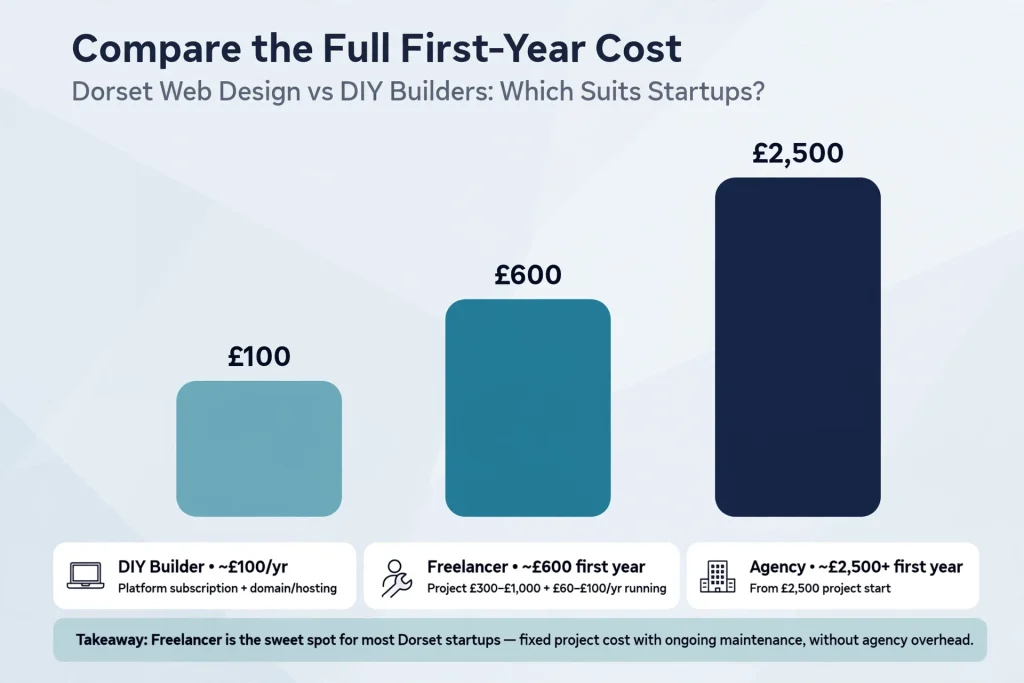
    The sticker price hides the real one. A DIY builder like Wix or Squarespace looks cheap at £150-£400 a year, but add your domain, business email, and 20-40 hours of your own time and it climbs fast. A professional website design from a UK freelancer or local studio usually runs £300-£1,000 one-off, then about £60-£100 a year to run. Agencies start near £2,500. The sweet spot for most Dorset startups sits in that middle band: done-for-you work at a fixed price, without agency overhead.

    First-year cost comparison bar chart for Dorset web design options
    First-year cost comparison bar chart for Dorset web design options

    UK cost guide

    Time, Design, and Day-to-Day Control

    DIY looks free until you count the hours. A first-time business site on Wix or Squarespace takes 20 to 60 hours to build, plus a couple of hours a month on updates and fixes. That’s evenings and weekends you don’t spend on customers.

    Design is the other trade-off. Templates work, but they look like templates, and customising them past the demo stage is fiddly. Wix also won’t let you switch templates later without a rebuild.

    Done-for-you services like WebDon flip the model: you spend an hour or two providing details, they handle design, hosting, and updates. DIY wins on control; professionals win on time and polish.

    Also Read: About WebDon · Dorset Web Design from a Print Studio

    Local Visibility, Ownership, and Future Growth

    Getting found by locals matters more than looks. A professionally built site pairs proper local SEO with a Google Business Profile, so you appear when someone searches “plumber near Weymouth”. DIY builders give you basic SEO tools, but settings that affect rankings often stay locked.

    Ownership is the other trap. Some designers register your domain in their own name, and UK law can leave the agency holding copyright unless your contract says otherwise, as guidance on website ownership explains. Ask three questions before signing: who owns the domain, who holds the files, and can you leave freely.

    For growth, pick a provider that scales with you, like WebDon’s fixed-price packages, rather than a platform that forces a rebuild later.

    Also Read: WebDon Journal · Getting Your Dorset Business Online

    Which Should a Startup Choose: a Dorset Designer or DIY Builder?

    Ask three questions: does your site need to win customers, do you have 20-40 spare hours, and will you want to grow? If the site must bring in leads, a Dorset designer wins. Local firms like WebDon build fast, search-ready sites at fixed prices, and one owner-run comparison notes most founders spend whole working weeks on DIY platforms, often with poor results.

    Choose DIY if you’re testing an idea on a sub-£500 budget and your site is just a digital business card.

    The honest test: if one lost customer per month costs more than a professional site, DIY is the expensive option.

    Homepage
    Homepage

    Still weighing it up? Skip the DIY learning curve and let WebDon build you a fast, fixed-price site that wins local customers.

    Frequently Asked Questions

    Q1: What are the key differences between a professional web designer and a DIY website builder?

    A designer handles setup, SEO and design for you; DIY means you build and maintain it yourself, saving cash but spending time.

    Q2: How much does a professional website cost for a startup in the UK?

    Most startups pay £300-£1,500 for a fixed-price site. WebDon offers affordable Dorset packages without agency fees.

    Q3: What are the hidden costs of using DIY website builders?

    Expect add-ons for plugins, ecommerce, email and domain, plus your own hours. Fees rise as your site grows.

    Conclusion

    DIY builders suit test ideas and tight budgets; professional design wins when your site must bring in customers. Dorset startups should weigh time, risk, and growth – and with 78% of UK businesses now online, a site that works matters more than one that’s cheap (Whito).

  • Affordable Web Design Quotes: What Should a Fair Price Include?

    Affordable Web Design Quotes: What Should a Fair Price Include?

    Affordable Web Design Quotes: What Should a Fair Price Include?

    Quick Summary: A fair web design quote must spell out page scope, features, revisions, ownership, and ongoing costs like hosting and support, not just the headline price. UK small firms should compare quotes against the same brief and ask who owns the domain and files, since cheap quotes often exclude content, SEO, or launch help.

    A local plumber might get one £600 quote and another for £3,000 for the same claimed five-page site. The lower figure is not always the better deal. Compare web design quotes by scope, ownership, support, and future costs.

    Table of Contents

    What a Fair Affordable Web Design Quote Should Include

    Planning, Pages, and Design Scope

    A fair quote states how many pages you get, such as Home, Services, About and Contact. It should also say who writes the copy, supplies images, and approves the design.

    Quote item What to check
    Page scope Named pages and page limits
    Design Custom layout or template edits
    Revisions Number of included change rounds

    Ask what counts as an extra page. A cheap quote can rise fast if every service needs its own page.

    Technical Essentials and Launch Setup

    Look for mobile testing, contact-form setup, basic search setup, domain connection, and clear handover details.

    • Hosting and renewal cost
    • Website ownership and login access
    • Basic cookie and privacy setup
    • Launch support and fixes

    Separate the Build Price From the Costs You Will Keep Paying

    One-Off Items That May Be Excluded

    A low build quote may not include copy, photos, logo work, page uploads, booking tools, shop setup, or basic local SEO. Ask for each item in writing.

    Ask about Why it matters
    Content and images Extra work can raise the final bill
    Features and forms Booking or payment tools may cost more
    Launch support You need clear handover and testing

    Tip: Compare quotes using the same page count and feature list.

    Recurring Costs and Ownership

    Budget separately for domain renewal, hosting, email, plugin licences, backups, security, and edits.

    Confirm that you own the domain, website files, and logins. Ask who pays renewals, what support covers, and the cost to leave.

    Compare Web Design Quotes on Value, Not the Headline Number

    Put Every Provider Against the Same Brief

    Send each designer the same page list, features, content help, launch date, and monthly needs.

    Check Ask each provider
    Build How many pages and revisions?
    Ownership Do I own the domain, site, and content?
    After launch What support and monthly fees apply?

    Know When a Cheap Quote Is a Warning Sign

    A low price can work for a simple site. It is a warning if the quote skips hosting, mobile checks, search basics, or handover.

    • Ask what is excluded.
    • Get renewal costs in writing.
    • Check who can edit or move the site.

    A clear fixed price beats a vague bargain that grows later.

    Ask These Questions Before You Accept a Quote

    A low quote is only a bargain if it covers what your business needs. Ask the designer:

    1. What pages, features, and revisions are included?
    2. Who owns the domain, website files, text, and images after launch?
    3. What will I pay each year for hosting, support, email, updates, and licences?
    4. Will you set up my contact form, Google Business links, and basic local SEO?
    5. Who fixes faults after launch, and what does that cost?
    6. Are privacy and cookie requirements included?

    Warning: Never accept "from" pricing without a full list of exclusions.

    Get a clear, fixed-price website quote with WebDon. Launch quickly, own your site, and attract local customers.

    Frequently Asked Questions

    Q1: Top cheap website designers for small firms?

    Choose a provider with clear scope, fixed costs, and client ownership. Compare included pages, edits, hosting, search basics, and support.

    Q2: What should a fair web design quote include?

    It should list design, build, mobile setup, contact forms, basic search setup, launch support, and any monthly fees.

    Q3: Who owns my website after launch?

    You should own your domain, content, and site files. Check whether moving hosts later involves fees or limits.

    Conclusion

    Choose the quote with clear scope, real ownership, and known ongoing costs, not the lowest headline price. Get copyright terms in writing.